
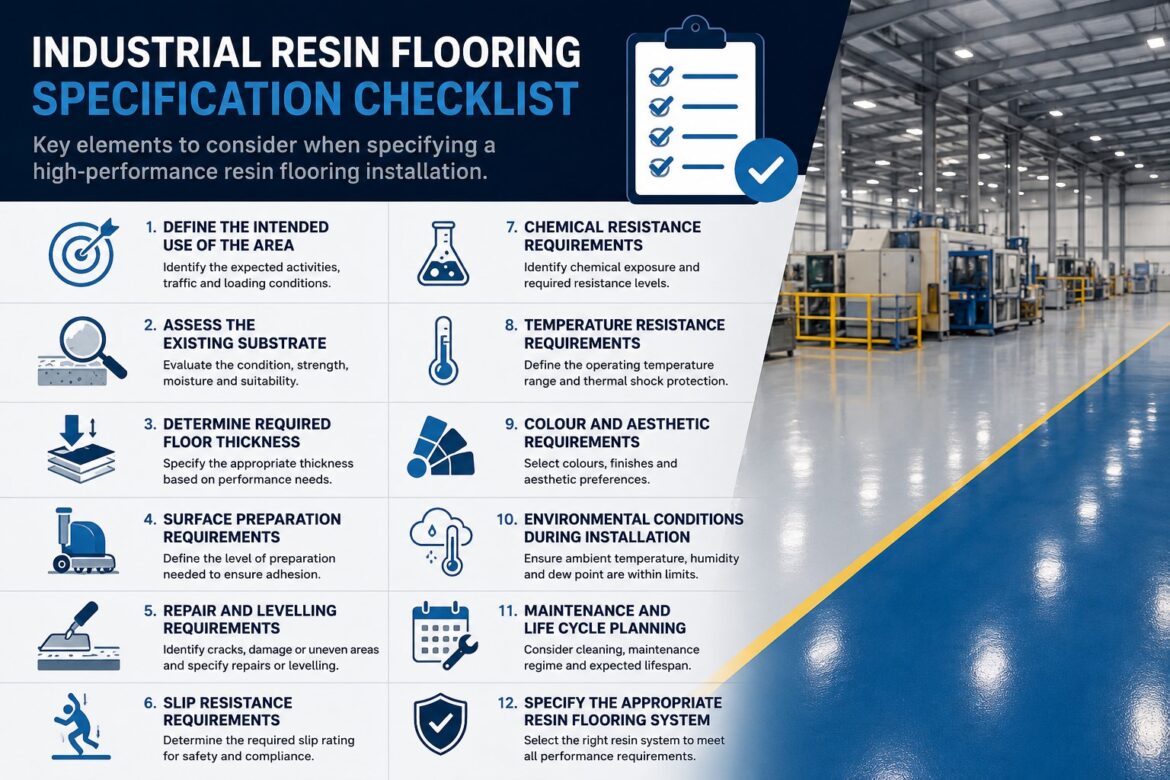

Industrial resin flooring is widely used across manufacturing plants, warehouses, food processing facilities, pharmaceutical environments, laboratories, engineering workshops, and commercial premises. Selecting the correct flooring system requires more than simply choosing a resin type. A comprehensive specification must consider the operating environment, substrate condition, performance requirements, installation methodology, and long-term maintenance objectives.
This industrial resin flooring specification checklist outlines the key elements that should be included when specifying a high-performance resin flooring installation.
- Define the Intended Use of the Area
The first step in any flooring specification is understanding how the floor will be used.
Consider the following:
- Type of operation being carried out
- Volume and frequency of pedestrian traffic
- Forklift and vehicle movements
- Static and dynamic load requirements
- Exposure to chemicals, oils, solvents, or cleaning agents
- Temperature fluctuations and thermal shock risks
- Hygiene and contamination control requirements
Different operational environments demand different flooring characteristics. For example, a food production facility may prioritise hygiene and thermal resistance, while a warehouse may require superior abrasion and impact resistance.
- Assess the Existing Substrate
A detailed substrate survey should be completed before selecting a resin flooring system.
Key considerations include:
- Concrete strength and integrity
- Surface laitance and contamination
- Moisture content
- Presence of cracks, joints, or movement
- Existing coatings or floor finishes
- Surface regularity and level tolerances
The condition of the substrate significantly influences the long-term performance of the resin flooring installation. Any defects should be identified and addressed during the preparation phase.
- Determine Required Floor Thickness
The thickness of the resin system should reflect expected loading and service conditions.
Typical specifications include:
- 0.5–1mm: Resin coatings
- 2–3mm: Self-smoothing systems
- 4–6mm: Heavy-duty industrial flooring
- 6–9mm+: High-impact and thermal-resistant systems
Thicker systems generally provide greater durability, impact resistance, temperature resistance and service life.
- Surface Preparation Requirements
Surface preparation is one of the most critical elements of a successful resin flooring installation.
The specification should define:
- Mechanical preparation method
- Diamond grinding requirements
- Shot blasting requirements
- Removal of contaminants
- Repair procedures for cracks and defects
- Surface profile standards
Proper preparation is key to ensuring maximum adhesion between the substrate and resin system and reducing the risk of delamination / failure.
- Repair and Levelling Requirements
Industrial floors often require repairs before resin application.
The specification should address:
- Crack repairs
- Joint repairs
- Surface reinstatement
- Levelling compounds
- Localised patch repairs
A sound and uniform substrate is essential for achieving a durable finished floor.
- Slip Resistance Requirements
Health and safety considerations should form part of every flooring specification.
The required slip resistance should be based on:
- Wet or dry operating conditions
- Contamination risks
- Pedestrian traffic levels
- Industry-specific regulations
Slip-resistant aggregates can be incorporated into the resin system to achieve the desired level of traction without compromising cleanability.
- Chemical Resistance Requirements
Industrial environments often expose floors to aggressive substances. It is important to consider the type of chemicals that the floor is being exposed to as well as the frequency of the exposure.
The specification should identify exposure to:
- Acids
- Alkalis
- Solvents
- Oils and fuels
- Cleaning chemicals
- Process chemicals
The selected resin system must be capable of withstanding these substances throughout its service life. It is also important to consider whether the chemicals are being spilled individually or combined as a compound.
- Temperature Resistance Requirements
Many industrial environments expose their floors to high temperatures. If the temperature range of the environment isn’t properly matched to the resin type, the floor can deform, lose strength, or fail prematurely.
Temperature changes also cause expansion and contraction. If the resin floor and the concrete substrate expand at different rates, stress builds up at the bond line. Over time this can lead to cracking, delamination, or blistering—particularly in industrial environments, chemical plants, or cold storage areas where temperatures cycle frequently.
- Colour and Aesthetic Requirements
While performance remains the primary consideration, aesthetics also play an important role.
The specification may include:
- Standard colour selection
- Zoning and colour coding
- Safety demarcation lines
- Decorative finishes
- Corporate branding requirements
Colour coding can improve workplace safety and operational efficiency.
- Environmental Conditions During Installation
Successful installation depends on suitable site conditions.
The specification should define:
- Minimum substrate temperature
- Maximum substrate temperature
- Ambient temperature limits
- Relative humidity limits
- Ventilation requirements
Environmental controls help ensure consistent curing and optimal system performance.
- Maintenance and Lifecycle Planning
A flooring specification should extend beyond installation and consider long-term performance.
The maintenance strategy should include:
- Cleaning recommendations
- Inspection schedules
- Repair procedures
- Refurbishment options
- Expected service life
Proper maintenance can significantly extend the lifespan of an industrial resin flooring system while protecting your investment.
- Specify the Appropriate Resin Flooring System
Several resin flooring technologies are available, each offering different performance characteristics.
Specifying the most appropriate resin flooring system is critical because it directly affects long-term performance, safety, maintenance requirements and lifecycle cost; an unsuitable choice can lead to premature failure, hygiene risks, operational disruption and unnecessary replacement costs, whereas a correctly specified system ensures durability, compliance with industry standards and optimal performance for the specific environmental conditions.
Common options include:
Epoxy Resin Flooring, Polyurethane Resin Flooring, MMA (Methyl Methacrylate) Resin Flooring
The resin type chosen should match the operational requirements of the facility. Assessing all of the factors above will help identify the most appropriate resin flooring system for the chosen environment.
Conclusion
A successful industrial resin flooring installation begins with a well-developed specification. By addressing substrate condition, resin selection, preparation methods, moisture management, safety requirements, environmental conditions, and maintenance planning, project stakeholders can ensure the flooring system delivers reliable long-term performance.
Using a structured specification checklist helps reduce project risks, improve installation quality, and maximise the operational lifespan of the finished floor. Whether the project involves a warehouse, manufacturing facility, food production plant, or pharmaceutical environment, a detailed specification remains the foundation of a durable and effective resin flooring solution.
Need further assistance?
If you require advice on the correct specification for your flooring requirements, working with experienced resin flooring contractors can help ensure you choose the most cost-effective and long-lasting solution.
Our team specialises in commercial resin flooring and industrial resin flooring systems for a wide range of environments.
If you would like further advice, arrange a site survey, or request resin flooring samples, contact our team today and we will be happy to help.
Author: Anna Dewdney