
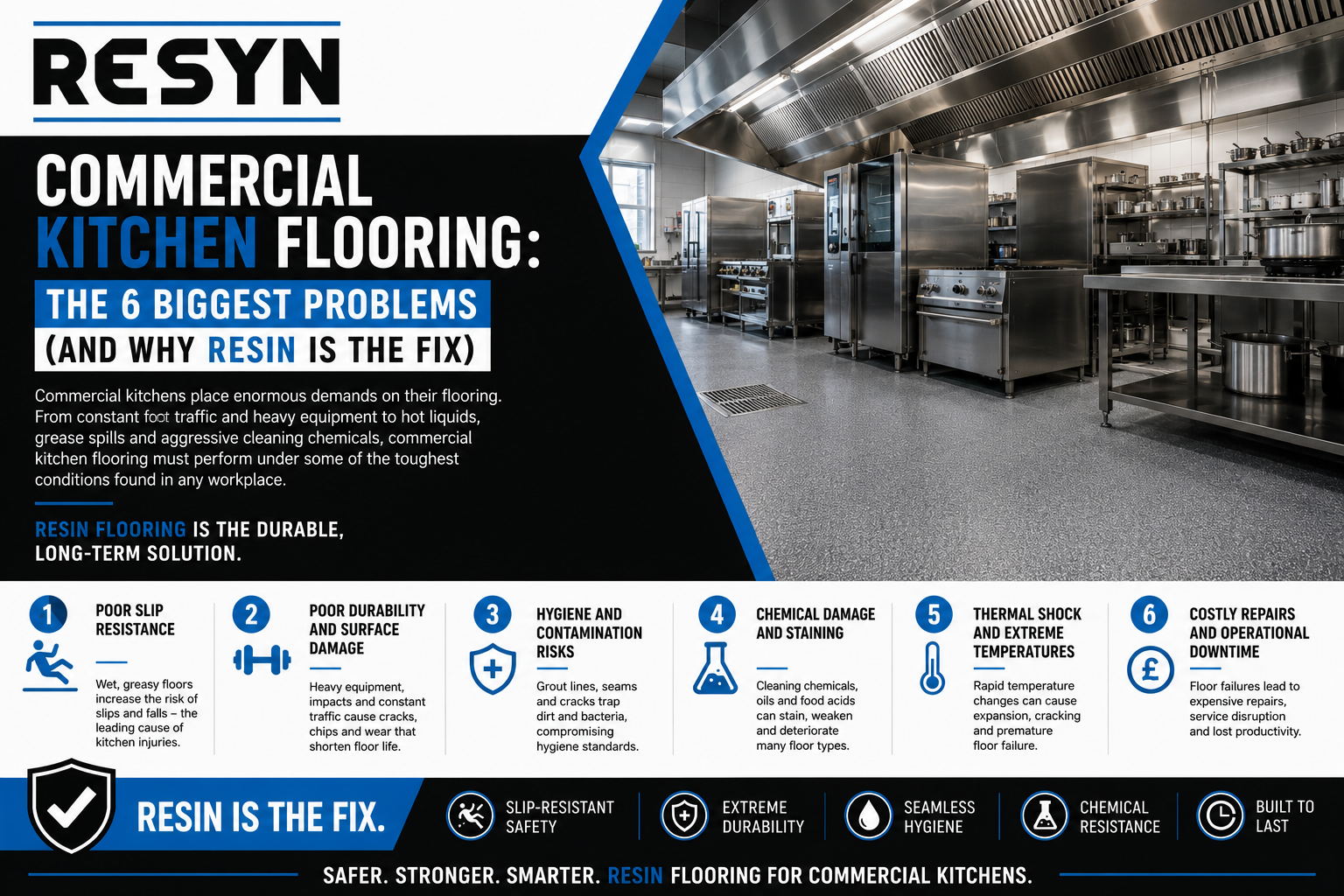

Commercial kitchens place enormous demands on their flooring. From constant foot traffic and heavy equipment to hot liquids, grease spills and aggressive cleaning chemicals, commercial kitchen flooring must perform under some of the toughest conditions found in any workplace.
Over time, issues such as poor slip resistance, cracking, contamination risks and chemical damage can create safety concerns, hygiene failures and costly disruption to daily operations.
1.Poor Slip Resistance
One of the most common issues with commercial kitchen flooring is a lack of adequate slip resistance.
Commercial kitchens are fast-paced environments where spills are unavoidable. Water, oils, fats, food waste and cleaning products can quickly create hazardous conditions underfoot. Combined with staff moving at speed during busy service periods, even a small slip can result in serious injury.
The Problem
Slips and falls remain one of the leading causes of workplace accidents within the hospitality and food service sectors. In addition to the risk of injury, accidents can lead to staff absences, insurance claims and potential health and safety investigations.
Flooring that becomes smooth or polished through wear can significantly increase these risks.
Many flooring suppliers will provide data for slip resistance in dry conditions only. A commercial kitchen is prone to spills and therefore the floor should remain slip resistance under operational conditions.
Why Resin Is the Fix
Resin flooring systems can be installed with specialist anti-slip aggregates that provide enhanced grip in both wet and greasy conditions. The level of slip resistance can be tailored to the operational requirements of the kitchen, ensuring a safer environment without compromising cleanability.
This makes resin flooring one of the most effective kitchen flooring solutions for improving workplace safety.
2. Poor Durability and Surface Damage
Commercial kitchen floors are subjected to constant use throughout the day.
Heavy appliances, wheeled trolleys, dropped utensils, pallet trucks and continuous foot traffic all place significant stress on the floor surface.
The Problem
Traditional flooring materials often struggle to withstand these demands over the long term. Cracks, chips, surface wear and delamination can quickly develop, affecting both appearance and performance.
Damaged flooring not only looks unprofessional but can also increase cleaning difficulties.
Why Resin Is the Fix
Commercial resin flooring systems are designed specifically for high-traffic environments. They offer exceptional strength and durability, helping them withstand impacts, abrasion and heavy loads without deteriorating.
By investing in a robust resin flooring system, businesses can significantly reduce maintenance costs and extend the lifespan of their commercial kitchen floor.
3. Hygiene and Contamination Risks
Maintaining high standards of cleanliness is essential in any food preparation environment.
Whether operating a restaurant kitchen, catering facility or food manufacturing plant, businesses must minimise contamination risks and comply with strict hygiene regulations.
The Problem
Many traditional flooring systems contain grout lines, joints and seams that can trap food particles, dirt, moisture and bacteria. Cracks and damaged areas create further opportunities for contamination and can become difficult to clean effectively.
These hidden problem areas can compromise hygiene standards and increase the risk of bacterial growth.
Why Resin Is the Fix
Unlike tiled surfaces, resin floors are seamless, they have no grout lines where dirt and bacteria can accumulate. The impervious surface makes cleaning more efficient and supports high standards of hygiene throughout the kitchen.
Resin flooring can also be installed with coved skirting, creating a seamless transition between the floor and wall. This eliminates joints and hard-to-clean corners where dirt, moisture and bacteria can collect, making cleaning easier and helping to maintain hygiene standards.
For this reason, hygienic resin flooring with coved skirting is widely used within commercial kitchens.
4. Chemical Damage and Staining
Commercial kitchens rely on powerful cleaning products to maintain hygiene standards.
While essential for cleanliness, these chemicals can be highly damaging to certain flooring materials.
The Problem
Repeated exposure to degreasers, disinfectants, oils, fats and food acids can cause staining, discolouration and surface deterioration. Over time, flooring may weaken and require repair or replacement.
Why Resin Is the Fix
Resin flooring systems offer excellent resistance to a wide range of chemicals commonly found in commercial kitchens.
This chemical resistance helps preserve the integrity of the floor while maintaining its appearance, making it a cost-effective long-term flooring solution.
5. Thermal Shock and Extreme Temperatures
Commercial kitchens regularly experience rapid temperature fluctuations.
Heat generated by ovens, grills, fryers and other cooking appliances can place constant thermal stress on the floor. In many facilities, these conditions are further contrasted by nearby cold rooms and refrigerated storage areas.
The Problem
Many flooring systems expand and contract when exposed to temperature changes. Over time, this movement can lead to cracking, debonding and premature failure.
Thermal shock is particularly common in busy kitchens where hot and cold conditions occur simultaneously.
Why Resin Is the Fix
Specialist polyurethane resin flooring systems are specifically designed to withstand thermal shock and temperature extremes.
Their ability to tolerate sudden temperature changes makes them particularly well suited to demanding commercial kitchen environments.
6. Costly Repairs and Operational Downtime
When commercial kitchen flooring fails, the consequences often extend far beyond the floor itself.
The Problem
Floor repairs can disrupt service, restrict access to work areas and create costly downtime. In some cases, businesses may need to close parts of the kitchen while remedial works are completed.
These interruptions can affect productivity, customer service and profitability.
Why Resin Is the Fix
High-quality resin flooring provides a long service life and requires minimal maintenance compared to many traditional flooring systems.
Its durability, chemical resistance and seamless finish help reduce the likelihood of unexpected failures, allowing businesses to focus on operations rather than ongoing repairs.
Conclusion
Choosing the right commercial kitchen flooring is essential for maintaining safety, hygiene and operational efficiency. From slip hazards and contamination risks to chemical exposure and thermal stress, the wrong floor can quickly become a costly problem. A well-designed commercial resin flooring system provides a durable, seamless and hygienic solution that helps commercial kitchens perform reliably day after day.
Need further assistance?
If your commercial kitchen flooring is showing signs of wear, cracking, poor slip resistance or hygiene issues, RESYN can help.
As an experienced flooring contractor, we install high-performance commercial resin flooring systems designed for demanding kitchen environments, delivering long-term durability, safety and hygiene. Contact RESYN today to discuss your project and find the right flooring solution for your business.
Author: Anna Dewdney