

In most manufacturing environments, flooring is rarely the first thing managers think about when assessing efficiency, safety, or maintenance costs. Production equipment, staffing, and output targets naturally take priority. Yet the condition of a factory floor influences all of these areas more than many businesses realise.
A damaged, unsuitable, or ageing floor can contribute to accidents, unplanned downtime, contamination risks, and ongoing maintenance expenses. Over time, these issues can become significant operational challenges.
Modern resin flooring systems have become a popular solution across manufacturing, warehousing, food production, pharmaceuticals, and engineering facilities because they are specifically designed to withstand demanding industrial conditions.
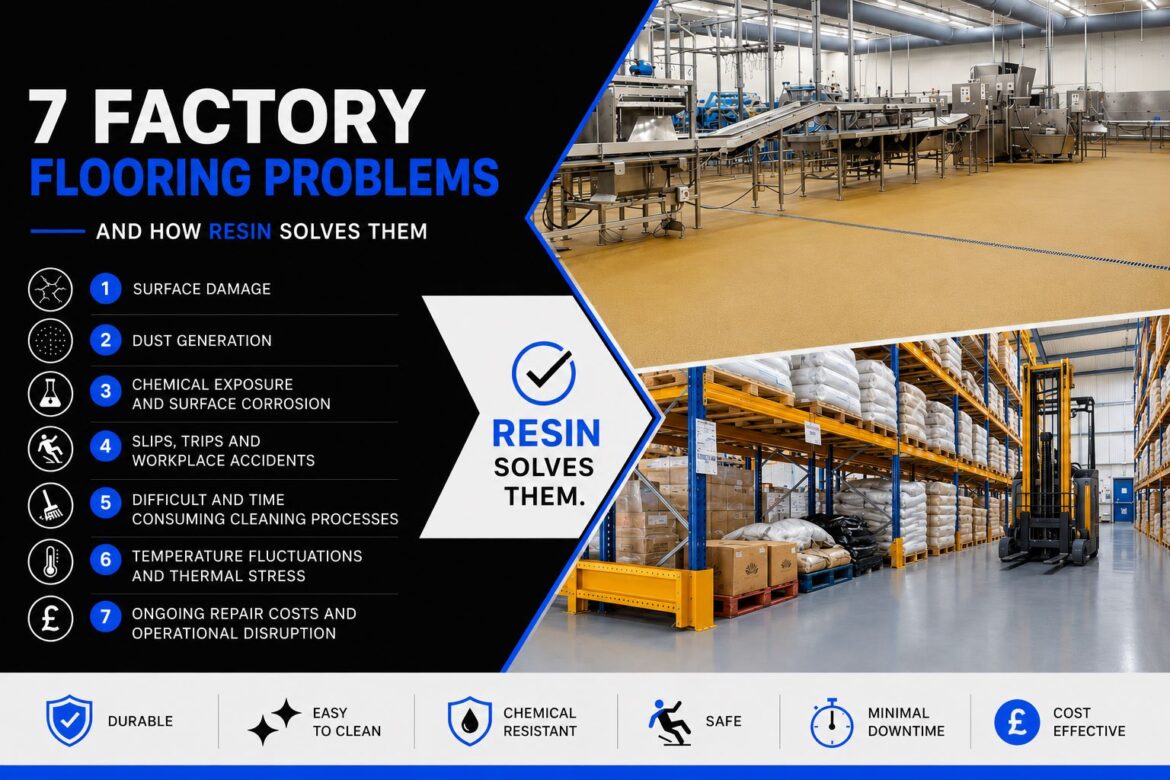
Here are seven common factory flooring problems and the ways resin flooring helps overcome them.
- Surface Damage from Heavy Machinery and Constant Traffic
Factory floors endure enormous daily pressure. Forklift trucks, pallet movers, production machinery, and heavy loads all place significant stress on the floor surface.
Traditional concrete flooring often develops cracks, chips, and surface wear over time. Once deterioration begins, the damage can spread quickly, creating uneven surfaces that affect both equipment movement and workplace safety.
Resin flooring systems create a highly durable protective layer over the substrate. Depending on the specification and when designed for industrial use, they can withstand heavy traffic, impact forces, and continuous mechanical wear. The result is a floor that remains functional for much longer, reducing repair frequency and operational disruption.
- Dust Generation from Concrete Degradation
One of the less obvious problems in industrial environments is dusting. As untreated concrete ages, microscopic particles break away from the surface and become airborne.
While this may seem like a minor issue, excessive dust can affect product quality, contaminate sensitive manufacturing processes, increase cleaning requirements, and contribute to equipment maintenance problems.
Resin flooring eliminates this issue by sealing the surface completely. The hardened finish prevents particle release and creates a dust-free environment that is easier to maintain. This is particularly valuable in sectors where cleanliness and quality control are critical, such as food manufacturing, electronics, and pharmaceutical production.
- Chemical Exposure and Surface Corrosion
Many factories use substances that can damage conventional flooring. Oils, solvents, cleaning agents, acids, alkalis, and other chemicals can gradually weaken concrete and create long-term structural issues.
When chemicals penetrate the floor surface, repairs often become more complex and expensive. In some cases, contamination can spread beneath the floor, leading to significant remediation work.
Resin flooring systems can be formulated with excellent chemical resistance, creating a protective barrier that prevents substances from penetrating the substrate. This allows spills to be cleaned effectively before damage occurs and helps maintain the integrity of the floor over the long term.
- Slips, Trips, and Workplace Accidents
Health and safety remain a major concern across all industrial sectors. Wet conditions, spillages, dust accumulation, and worn surfaces can increase the risk of slips and falls.
Even minor incidents can result in injuries, investigations, lost productivity, and increased insurance costs. In busy manufacturing environments, reducing these risks is an ongoing priority.
One of the advantages of resin flooring is its versatility. Anti-slip aggregates can be incorporated into the system to achieve the required level of slip resistance without compromising durability. This allows businesses to create safer working environments that are tailored to the specific hazards present within each operational area.
- Difficult and Time-Consuming Cleaning Processes
Cleaning requirements can place a considerable burden on maintenance teams. Floors containing cracks, joints, pits, or porous surfaces tend to trap dirt, bacteria, and debris, making effective cleaning more difficult.
In industries governed by strict hygiene regulations, inefficient cleaning processes can create compliance concerns as well as increased labour costs.
Resin flooring provides a seamless, non-porous finish that eliminates many of the areas where contaminants typically accumulate. The smooth surface allows cleaning equipment to operate more effectively and reduces the time required to maintain acceptable hygiene standards.
For facilities operating around the clock, these efficiency gains can translate into meaningful operational savings over time.
- Temperature Fluctuations and Thermal Stress
Many factories experience significant temperature variations. Cold storage facilities, commercial kitchens, food processing plants, and manufacturing environments often expose flooring to rapid temperature changes.
Standard flooring materials can expand and contract under these conditions, eventually leading to cracks, delamination, or premature failure.
Specialist resin flooring systems are available that are designed to accommodate thermal movement and withstand extreme temperatures. Certain heavy-duty resin solutions can tolerate both very low temperatures and high temperature washdowns, making them suitable for demanding industrial settings where thermal shock is a concern.
This resilience helps extend floor life while reducing the likelihood of costly repairs.
- Ongoing Repair Costs and Operational Disruption
Perhaps the most significant challenge associated with poor flooring is the cumulative cost of repairs.
Small cracks become larger defects. Localised repairs become recurring maintenance projects. Production schedules may need to be adjusted to accommodate remedial work, creating hidden costs that are rarely reflected in initial repair budgets.
A properly specified resin flooring system is designed as a long-term asset rather than a temporary fix. By protecting the underlying substrate and resisting the most common causes of deterioration, resin floors typically require less reactive maintenance throughout their lifespan.
This enables facility managers to move away from a cycle of constant repairs and instead focus on planned maintenance strategies that support operational continuity.
Looking Beyond the Surface
Factory flooring should not be viewed simply as a building component. It plays an active role in workplace safety, cleanliness, equipment performance, maintenance efficiency, and overall operational reliability.
The most successful manufacturing facilities understand that infrastructure decisions can have far-reaching consequences for productivity and cost control. Flooring is no exception.
Resin flooring addresses many of the challenges that traditional industrial surfaces struggle to overcome. By providing durability, chemical resistance, hygiene benefits, safety enhancements, and long-term performance, it helps create environments that are better suited to the demands of modern industry.
For organisations looking to reduce maintenance issues, improve safety standards, and support efficient operations, investing in the right flooring system can deliver benefits that extend well beyond the floor itself.
Need further assistance?
If you are having problems with your factory floor and would like an experienced resin flooring contractor to assess your floor and provide advice on how to fix them, please contact our resin flooring team for advice.
Our team specialises in commercial resin flooring and industrial resin flooring systems for a wide range of environments.
If you would like further advice, arrange a site survey, or request resin flooring samples, contact our team today and we will be happy to help.
Author: Anna Dewdney