

FeRFA (The Resin Flooring Association) is the UK’s main trade body for the commercial and industrial resin flooring sector. FeRFA acts as the industry authority for resin flooring in the UK. It represents manufacturers, specialist contractors, raw material suppliers, screeding companies, and associated service providers involved in resin flooring systems.
Selecting the correct resin flooring system for a commercial or industrial facility is one of the most important decisions in the lifecycle of a building. Flooring in these environments must withstand varying levels of traffic, chemical exposure, thermal shock, abrasion, moisture, hygiene demands, and operational wear.
Why FeRFA is important in resin flooring?
Setting industry standards
FeRFA is best known for creating technical standards and guidance notes that define how resin flooring systems should be specified, prepared, installed, and maintained. These standards are widely used by architects, contractors, specifiers, and clients as benchmarks for quality and performance.
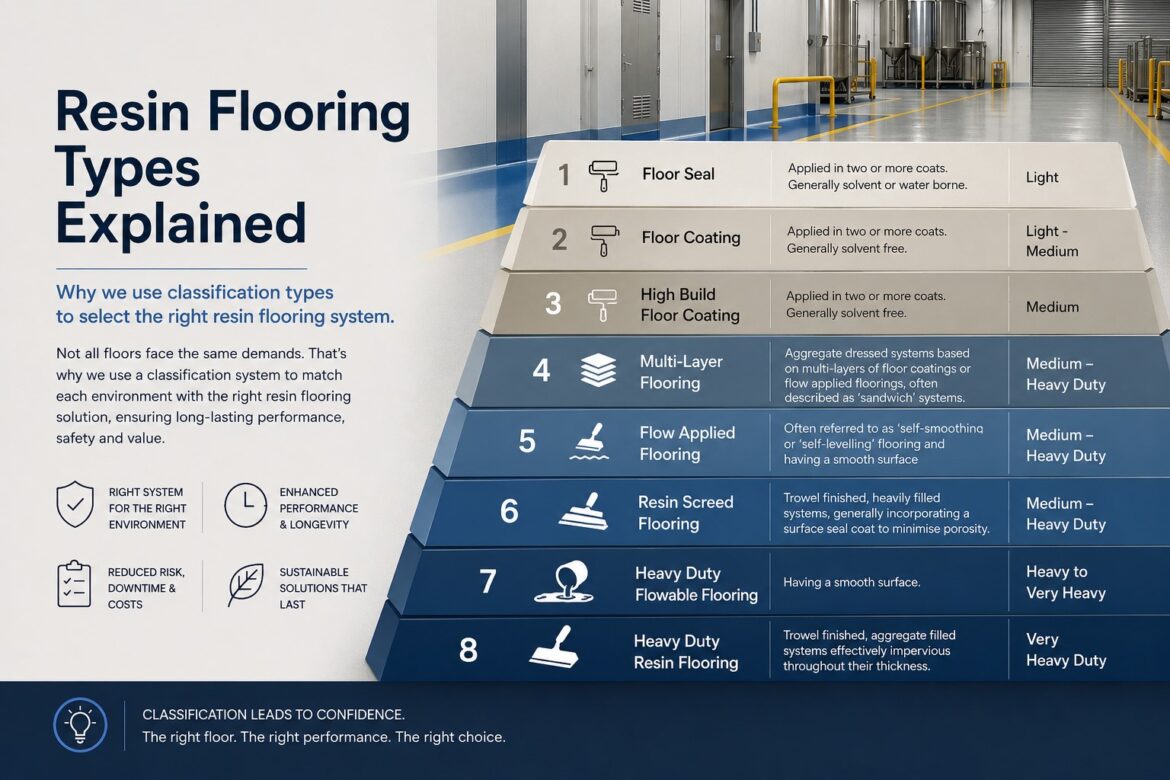
To simplify specification and improve consistency across the industry, the Resin Flooring Association (FeRFA) developed a recognised classification system that categorises resin flooring into eight distinct types based on thickness, performance, and intended duty.
What is the FeRFA Classification System?
FeRFA divides resin flooring systems into eight categories, ranging from thin decorative seals to extremely heavy-duty industrial screeds.
The classifications consider:
- System thickness
- Surface finish
- Application method
- Mechanical performance
- Chemical resistance
- Expected duty level
The higher the classification type, the greater the thickness and durability of the flooring system. The types are determined as highlighted in the table below.
Key Factors When Selecting a FeRFA Flooring System
Choosing the correct flooring specification should never rely solely on thickness or appearance. A successful resin flooring specification considers the entire operational environment including:
- Traffic and Loading
- Chemical Exposure
- Thermal Conditions
- Hygiene Requirements
- Slip Resistance
- Aesthetics and Branding
1.Traffic and Loading
An experienced and professional flooring contractor will evaluate the following:
- Pedestrian traffic
- Forklift movement
- Steel wheeled traffic
- Static loads
- Impact exposure
Higher traffic and heavier loading generally require Types 6–8.
2.Chemical Exposure
An experienced and professional flooring contractor will assess the following:
- Acids
- Alkalis
- Oils
- Solvents
- Cleaning chemicals
Different resin systems provide varying levels of chemical resistance. It is also important to note that a consideration should also be made for any chemicals compounds that are created as a result of individual chemicals being mixed together.
3.Thermal Conditions
An experienced and professional flooring contractor will assess the following:
- Hot water washdowns
- Steam cleaning
- Freezer conditions
- Thermal cycling
Polyurethane systems are typically preferred for thermal shock environments.
4.Hygiene Requirements
Seamless resin flooring is ideal for hygienic environments because it eliminates grout joints and reduces contamination risks.
Critical industries include:
- Food production
- Healthcare
- Pharmaceuticals
- Laboratories
5.Slip Resistance
Slip resistance can often be incorporated into the resin flooring system using:
- Quartz aggregates
- Textured finishes
- Multi-layer systems
The required level of slip resistance depends on operational conditions and safety regulations.
6.Aesthetics and Branding
Commercial environments increasingly require flooring that contributes to:
- Brand identity
- Customer experience
- Interior design
- Workplace wellbeing
Flow-applied decorative resin systems are often preferred in these applications.
Conclusion:
The FeRFA classification system provides an invaluable framework for selecting resin flooring systems in commercial and industrial environments.
By understanding the performance characteristics of each flooring type and aligning them with operational demands, facilities managers and specifiers can significantly improve durability, safety, hygiene, and long-term value.
From light-duty coatings to ultra-heavy-duty industrial screeds, there is a resin flooring solution suited to virtually every environment.
The key to successful specification lies in comprehensive evaluations of the operating environment as discussed above, combined with the expertise of the flooring installer.
When correctly specified and professionally installed, resin flooring systems deliver exceptional long-term performance while reducing maintenance, downtime, and operational disruption.
Ultimately, applying the FeRFA classification properly helps businesses achieve safer, more efficient, and more durable commercial and industrial facilities.
To discuss a resin floor specification contact us on 01778 343670.
Author: Anna Dewdney