
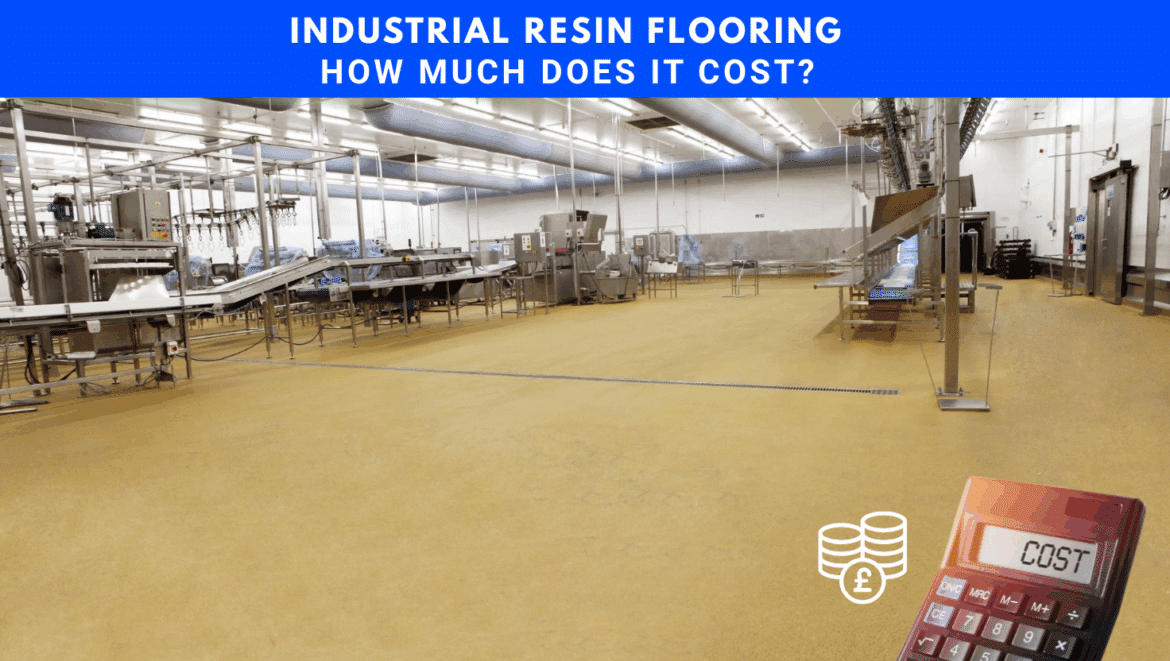

Industrial resin flooring has become a go-to solution across manufacturing plants, warehouses, and processing facilities due to its strength, resilience, and long lifespan. However, one of the most important considerations for any project is cost.
This guide outlines typical pricing for industrial resin flooring in the UK, along with the key factors that influence overall expenditure—helping you plan your project with confidence.
Typical Cost of Industrial Resin Flooring
In industrial settings, resin flooring generally ranges from £60 to £150 per square metre in the UK. Pricing can fluctuate depending on the system specification, installation requirements, and site conditions.
- Entry-level coatings: £25 – £70 per m² (light-duty use)
- Standard industrial systems: £60 – £120 per m²
- Heavy-duty or specialist systems: £100 – £160+ per m²
Most industrial environments require robust systems, meaning projects commonly sit within the mid-to-upper price range for industrial environments.
Industrial Resin Flooring Costs by System Type
Different resin technologies are designed for specific industrial demands, which directly impacts pricing.
- Epoxy Resin Systems
Epoxy resin flooring is widely used in industrial environments due to its affordability and strong performance. Most commonly used are epoxy coatings that provide a protective coating to concrete floors within warehouse.
Epoxy Typical range:
- £15 – £60/m² → thin coatings (150–300 microns)
- £40 – £90/m² → self-levelling (2–3mm)
- £55 – £130/m² → heavy-duty (4–6mm+)
Epoxy floors provide excellent resistance to chemicals, abrasion, and daily wear, making them ideal for warehouses, workshops, and logistics facilities.
- Polyurethane (PU) Systems
Polyurethane flooring is specifically designed for demanding industrial conditions, especially where temperature variation is a factor.
Polyurethane Typical Range:
- £50 – £90/m² → light–medium duty
- £70 – £150/m² → high-performance systems
PU systems are commonly used in food production areas, factories, and environments exposed to thermal shock or heavy machinery. Polyurethane systems can be installed at a thicker depth to further assist with temperature resistance and these do come at a high cost.
- MMA (Methyl Methacrylate) Systems
MMA flooring is often selected where speed of installation is critical.
Typical costs:
MMA Typical range:
- £80 – £160/m² (most common market range)
- Lower-spec: £60 – £100/m²
The key advantage of MMA is rapid curing, allowing floors to return to service within hours—minimising costly downtime.
What Influences Industrial Resin Flooring Costs?
Several variables can significantly affect the final price of your flooring project:
Area Size
Larger installations typically reduce the cost per m² due to improved efficiency, whereas smaller jobs may carry higher rates due to fixed setup costs.
Substrate Preparation
The condition of the existing concrete base plays a major role:
- Minimal prep = lower cost
- Repairs, levelling, or moisture treatment = increased cost
Preparation is often one of the most important cost factors in industrial environments.
System Selection
The required performance level will determine the system:
- Light-use areas: thinner coatings
- Heavy industry: thicker, impact-resistant systems
- Hygiene-critical zones: specialist PU systems
Higher-performance solutions naturally come with higher material and installation costs.
Floor Thickness
Industrial systems are typically thicker than commercial ones, increasing both material usage and labour time.
Finish and Safety Features
Additional elements can increase costs, including:
- Anti-slip textures
- Chemical-resistant finishes
- Decorative or colour-coded zones
These features are often essential in industrial settings for safety and compliance.
Site Logistics
Challenging working conditions can also impact pricing:
- Limited access
- Night or weekend work
- Phased installations
All of these can add to labour costs.
Installation Time and Business Impact
Installation speed is an important consideration in industrial environments where downtime can be expensive.
- Standard systems (Epoxy/PU): longer curing times
- Fast-track systems (MMA): usable within hours
Although rapid systems cost more upfront, they can reduce operational disruption—often balancing out the investment.
Additional Costs to Factor In
Beyond installation, you may need to budget for:
- Ongoing cleaning and maintenance
- Periodic repairs or resurfacing
- Future upgrades or re-coating
A well-maintained resin floor can last many years, improving overall cost efficiency.
Is Industrial Resin Flooring a Good Investment?
While the initial cost may be higher than some traditional flooring options, industrial resin flooring offers excellent long-term value.
Its key benefits include:
- High durability under heavy loads
- Resistance to chemicals and wear
- Low maintenance requirements
- Long service life
For industrial facilities, these advantages often result in reduced lifecycle costs.
Final Thoughts
Industrial resin flooring costs vary depending on system type, specification, and site conditions, with most projects falling between £60 and £150 per m².
By understanding the different systems available and the factors that influence pricing, you can make informed decisions and choose a flooring solution that meets both your operational needs and budget.
Author: Anna Dewdney